
Art history, narrative, and lessons for the present time
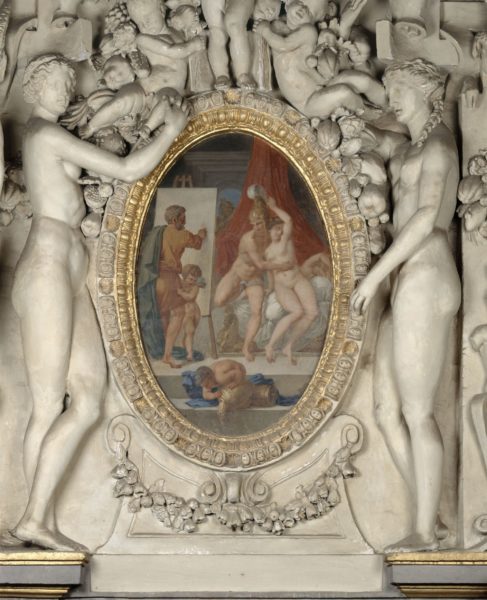
The history of art is grounded in ancient legendary narratives presented as historical foundations—a romance of origins taken up by Alberti (1435) and Vasari (1550), to name but two. As Paul Barolsky reminded us, “ Many of these stories of Apelles and Zeuxis, among others […] are appropriately called legends. They endure because they celebrate the skill and power of artistic illusion that we in fact find in ancient art. Pliny’s anecdotes are poetic fictions true to the art of antiquity, as we understand—or wish to understand—it (P. Barolsky, “Homer and the Poetic Origins of Art History,” Arion: A Journal of Humanities and the Classics, Third Series, Vol. 16, No. 3, Winter 2009). If they endure, it is also because, by adapting them to the taste of the day or interpreting them according to the expectations of the moment, they have been updated in a sense—reactivated, if not manipulated.
Thus, the regrettably sexist legend reported by Pliny the Elder, according to which Alexander the Great asked Apelles to paint his favorite mistress, Pancaspé, nude, and, realizing that in carrying out this order Apelles had fallen in love with her, gave her to him as a gift, has over time—and through a disastrous misunderstanding of the original legend—become a naïve love story between Apelles and Pancaspé (even though Pliny the Elder’s account gives absolutely no indication of the slightest consent).
This anecdote above all shows that a king disposes of a woman as if she were a commodity. This has not prevented art history from seizing upon it to exalt great painters, rewarded by kings with gifts of immeasurable value, and to praise the “magnanimity” of Alexander the Great: “This deed brought him no less glory than any victory; for it was a victory over himself, and it was not merely a concubine but a beloved woman that he gave to the artist, without even regard for the feelings of the favorite, who passed from the arms of a king into those of a painter” (Pliny the Elder, Natural History XXXV.86–87).
These distortions recall other forms of manipulation of narratives that we are subjected to today—for example, and at random, when a brutal warmonger claims the Nobel Peace Prize.
Raphael Cuir